


Did you know that the startup failure rate is about 90%, despite their innovative ideas and passionate teams? Here’s a surprising insight though: content marketing for startups isn’t just another expense — it’s often the difference between scaling fast or fading out.
You may be wondering, why is content marketing for startups important? Here’s why: It delivers triple the leads compared to traditional methods and costs 62% less.
Every single day, people share millions of pieces of content online changing digital marketing.Paid ads don’t work as well anymore due to an unauthentic feel and overcrowded space. Meanwhile, consumers are increasingly engaging with content on social platforms, with a significant shift towards user-generated content and social video platforms.
This suggests a preference for organic content over traditional advertising.
If you’re launching your first company or refining your startup content strategy, this guide will walk you through proven steps, help you avoid common mistakes, and set up a long-term growth plan.
By the end, you’ll have the tools and knowledge to create a powerful content marketing plan for startups that builds trust and drives real results.
Why Content Marketing for Startups Matters
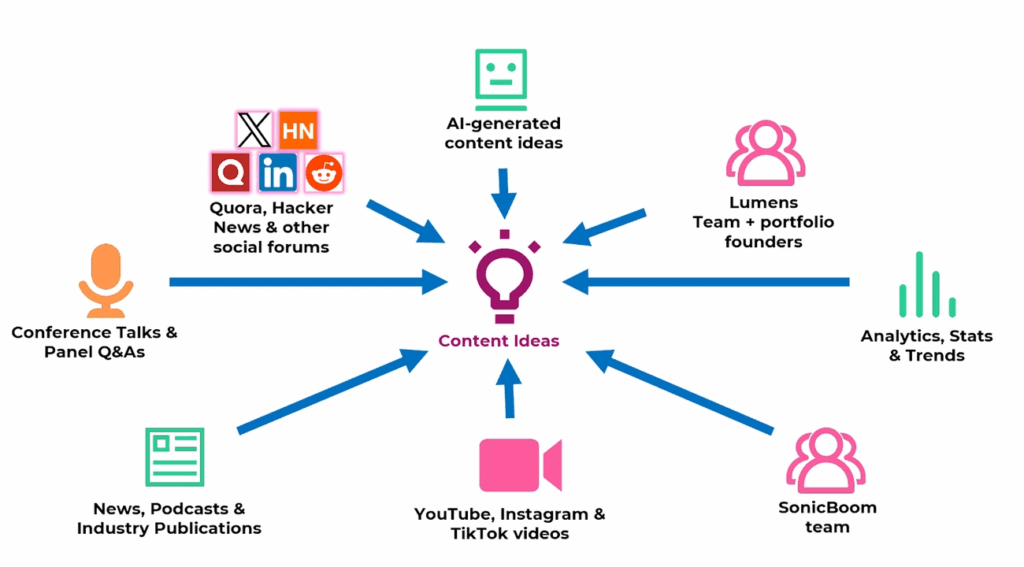
Content marketing for startups is a key strategy to use for tight budgets and growing competition. It takes a different approach compared to traditional marketing, which tends to use up resources fast.
Content marketing gives businesses a lasting way to connect with their target audience and leave a stronger impression.
Moving from paid ads to growing
Startups initially rely on paid ads for quick visibility and results, with algorithms targeting likely customers. However, this approach faces diminishing returns over time.
Ad costs increase while performance drops, and traffic vanishes once ad spending stops. This creates dependency since paid ads drive most sales despite rising expenses.
Successful startups are transitioning to organic growth through SEO-focused content creation. This provides sustainable ways to reach audiences without constant ad spending.
Blogs are particularly effective, especially for organic traffic, with each post addressing relevant topics for your audience. For many companies, blog content generates up to 90% of their website traffic.
The benefits of content marketing for startups: trust and authority
Strong business relationships rely on trust and authority. This is shown in various studies:
- People are likely to recommend brands they trust, with one global study finding a 0.79 correlation between trust and brand advocacy.
- 81% of consumers have to trust a brand before purchasing.
Content marketing plays a key role in creating this trust by using different strategies:
- Proving expertise: Consistently sharing educational and useful content that solves your audience’s problem can help in developing thought leadership in your industry.
- Creating connections: More than half of consumers feel connected when that brand’s values align with their own.
- Highlighting authenticity: The demand for authenticity is rising as 83% of people want retailers to provide more authentic shopping experiences to customers like them.
- Offering social proof: More than seven in ten people share that seeing good reviews or testimonials makes them trust a business more.
64% of consumers intentionally avoid ads that interrupt – the need for good content is higher than ever.
Useful content provides people with the details they are already looking for.
This way feels more helpful and less pushy. It helps build stronger relationships with your target audience.
Long-term value vs. short-term campaigns
Content marketing for startups is more valuable than traditional advertising – the value lasts longer than an ad campaign.
Paid ads are successful throughout the duration of the campaign, but when the campaign stops, so do the results.
Though content creation requires initial effort, it needs less upfront investment than ads. The long-term rewards include increased brand awareness and customer loyalty.
This approach helps startups build their presence within budget constraints.
Instead of purchasing temporary attention, content marketing creates enduring digital assets that deliver ongoing value as your business expands.
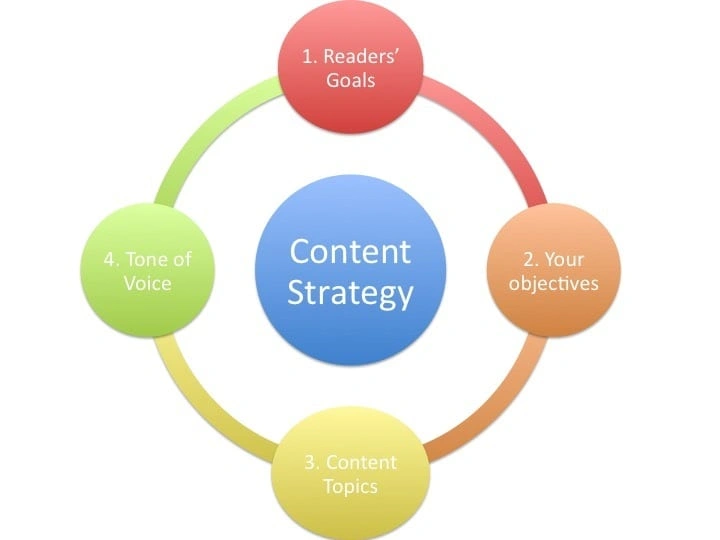
Image Source: Smart Insights
Before you start your content marketing plan, you need a strong base to steer your approach and help you succeed.
Skipping this step might make even the best ideas fall short for your startup.
Define SMART goals for content marketing for startups
Effective content marketing for startups requires strategy and precise goals.
Startups can use SMART goals—specific, measurable, achievable, relevant, and time-bound—for tracking progress and proving the value of their marketing work.
One example of a SMART goal in content marketing could be:
“Increase social media following by 10% in the next three months by teaming up with two influencers and creating a content campaign for each.”
This goal works because it defines the who, what, and where including:
- Specific numbers to measure progress;
- Fits within available resources to make it achievable;
- Relevant goal to improving your startup’s PR; and
- Has a clear three-month timeline to track success.
To keep your content goals practical and lasting, try using SMARTS goals.
Your marketing goals should target important results, not flashy stats. Tracking vanity metrics – likes, shares, comments, followers – is easy, but those numbers don’t measure ROI.
Focus instead on things like revenue, market share, customer lifetime value, or profitability.
Define your startup’s target audience
Surprisingly, 42% of marketers skip gathering even simple demographic data about their audience.
Ignoring this step is detrimental. Knowing your audience is essential to create content that drives results.
How to find your target audience?
Start by identifying the main problem your product solves and focus on pinpointing who needs that solution the most.
Say you’re working on a meal-kit delivery service. Your ideal customers could be professionals with packed schedules who don’t have time to shop or prepare food.
Once you’ve looked at things, gather market data to build detailed buyer personas.
These personas act as made-up individuals that represent the kind of people who would be your perfect audience. When creating these, include details like:
- Age
- Profession/job title
- Education level
- Income level
- Marital status
- Goals
- Pain points (problems that need solving)
- Media consumption
- Hobbies
- Habits
After discovering your buyer persona, figure out where they hang out online, what platforms they use most, and the kind of messages they connect with.
This information will be your guide on how to target your audience effectively.
Create your brand’s personality and message
Your brand’s voice acts as the character your company shows through all its communication.
It provides a roadmap on what your message should be and the way you should deliver it. This lets your business grab attention in a busy market.
A clear brand voice helps create trust, which matters because nearly 90% of U.S. consumers say that not trusting a brand is a dealbreaker when it comes to buying a product or using a service.
To build a distinct voice for your brand, begin by looking at your company’s mission.
This represents the essence of what your brand stands for.
Look at your mission statement and pinpoint the key values that shape your business identity. Then, review your best-performing content to figure out what has clicked with your audience so far.
If figuring out your brand voice is difficult, consider thinking about what you don’t want it to be.
Whether it’s something like, “Our brand voice isn’t pretentious” or “Our brand voice isn’t overly serious” – these ideas can help create the opposite type of voice that fits what you want.
Start by setting up your brand voice and formalizing it in a style guide.
Add clear guidelines to help creators match the tone across different platforms and contexts. Let the guide serve as the go-to resource to plan, write, edit, or review content.
Creating and Distributing High-Impact Content
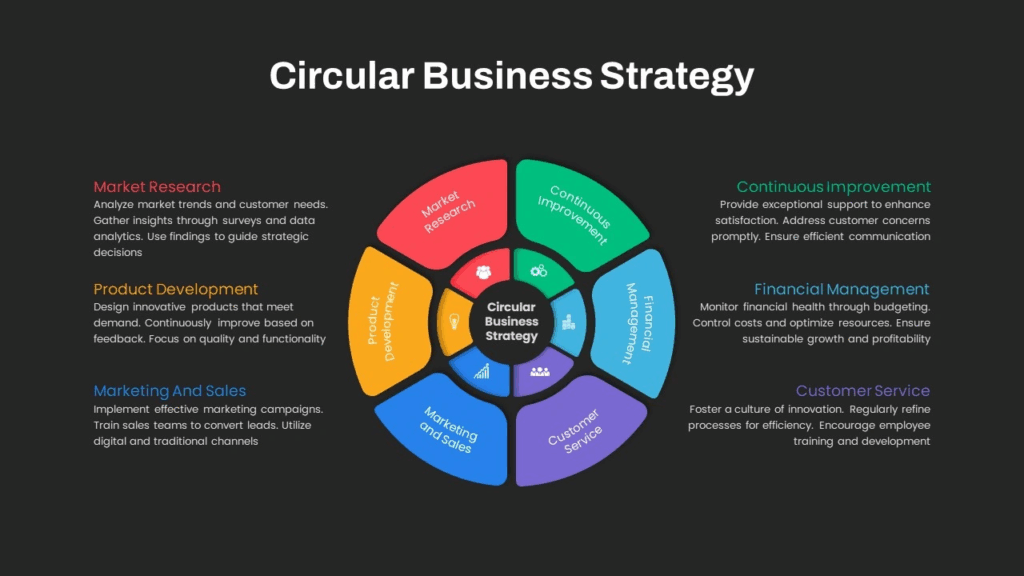
Image Source: SlideBazaar
Making content that stands out is just part of the challenge.
Knowing how to share it well is what drives a startup’s growth. Using the right methods can bring your content to the right people – giving you the best return on your efforts.
Pick the best content types
To pick the right marketing channels, you need to know what your audience likes.
Each format has different strengths:
- Video marketing grabs a lot of attention but takes plenty of work and resources.
- Blogs work well for boosting SEO and showing your expertise.
- Podcast marketing is a great option for people who prefer listening over reading.
- Infographics let you break down complicated ideas into visuals that are easier to understand.
- Influencer marketing builds trust quickly by leveraging established voices your audience already follows.
Success depends on choosing formats that fit your situation – choose your content medium based on your team’s strengths and your audience’s preferences.
A team skilled in graphic design might get better results using professional infographics instead of trying to make videos. In the same way, if your audience spends time on TikTok, creating fun short videos would work better than publishing long articles.
Use a calendar for content planning
A content calendar acts as a guide to maintain regular publishing. This is a useful organization tool, as content marketing for startups may seem overwhelming at first.
Regular publishing plays an important role in keeping your audience engaged and boosting SEO. Your content calendar can be tailored to your team’s needs, but at minimum, should cover the following information:
- Channel
- Topic
- Type of content
- Date and time for publishing
- The person in charge
- Current publication status
An organized calendar mixes short-term tactical content with timeless pieces that stay useful over the long haul. This method helps maintain a steady flow of reliable content even when things slow down.
Share on the best platforms
Innovative content marketing doesn’t just stop at creation—it’s also about finding creative ways to distribute your message where your audience already spends time.
Each platform brings something different to the table.
LinkedIn performs well in B2B spaces, while Instagram uses images for story-telling. Email marketing helps you communicate to your audience. Meanwhile online communities can boost your brand’s credibility and trust.
Think about where and how you’ll share your content before you begin creating it.
Your content distribution plan affects the style and format of your work.
Use one piece of content across different platforms
An amazing 59% of companies reuse and repurpose their content – seeing it as a smart way to save time and effort.
Instead of always making fresh content, you can change what you already have into something new.
A single blog post can be repurposed into a newsletter for email marketing, social media marketing content, or short-form videos that drive ongoing engagement. This method helps you save time and share your content with more people.
Want help creating a smart strategy for content repurposing? Check out LRBrained’s site to get expert content marketing services made just for startups.
Measuring Success of Content Marketing for Startups
Startups need to evaluate content performance not just by looking at numbers but by showing its value and shaping what comes next.
The success of any content marketing strategy for startups depends on tracking the right KPIs—beyond just likes and followers.
Research shows that only about 49% of marketers believe their teams measure content effectiveness. This shows the pressing need to improve in this area.
Focus on Critical Content Marketing Metrics
Measuring well starts with picking the right numbers to monitor.
- Customer Acquisition Cost (CAC)
- Formula: Total Sales and Marketing Costs / Number of New Customers Acquired
- Customer Lifetime Value (LTV):
- Formula: LTV = (Average Revenue Per Account × Gross Margin) ÷ Churn Rate
- Conversion Rates:
- Formula: (Conversions / Total Audience) x 100
- Customer Retention Rate:
- Formula: ((Number of Customers at End of Period – Number of New Customers Acquired During Period) / Number of Customers at Start of Period) x 100
Use content analytics to improve your strategy
After gathering data, use analysis to guide advancements.
Frequent performance reviews of your content help identify what connects with your audience. Platforms like Google Analytics reveal audience behavior trends and help you base your decisions on data.
Think of analytics like your roadmap to sprint.
Use analytics to pinpoint underperforming content, experiment with new strategies, and make targeted improvements that boost engagement and conversions.
A continuous cycle of creation, measurement, and refinement is necessary for ongoing results and improvement.
When to change your startup content strategy
Figuring out the right time to pivot can be tough. Content marketing for startups will be trial and error and will require adjustments down the road.
Many marketers see low audience engagement as a clear sign to shift strategies. Metrics not meeting targets also push teams to rethink their approach based on reliable data.
To make big changes, start by figuring out where things stand in terms of performance.
Next, put together a clear plan to shift strategies with goals that are specific and easy to measure so you can monitor progress.
Trying to improve how your startup approaches content? Head over to LRBrained’s website to find expert advice on tracking and boosting your content marketing results.
Common Mistakes Startups Make (And What to Avoid)
Many startups sabotage their content marketing efforts through preventable mistakes. Understanding these pitfalls helps you avoid wasting valuable resources on ineffective strategies.
Publishing without a clear strategy
Unfortunately, many startups create content without clear objectives.
Establishing the marketing strategy for a startup is the foundation of building brand awareness, trust, and a loyal customer base.
Without specific goals tied to business outcomes, your content becomes disconnected and fails to create cohesive audience experiences. First, establish SMART goals and understand your intended audience response before creating any content.
Ignoring SEO and keyword research
Neglecting SEO is a critical error – without proper keyword research, even excellent content remains invisible.
Proper SEO setup includes technical elements like site structure and strategic keyword targeting based on search intent.
Focusing only on product, not audience
Content that exclusively promotes your product fails to build trust.
In reality, 79% of successful marketers cite in-depth target audience knowledge as their critical success factor. Focus on solving problems rather than selling solutions.
Neglecting distribution and promotion
Creating content without promotion is a wasted investment.
Some experts suggest spending twice as long promoting content as creating it. Develop distribution plans across appropriate channels before publication.
Giving up too early on your startup’s content marketing efforts
Content marketing requires persistence.
Notable results typically take 12-18 months to materialize.
Content for startups isn’t about converting customers immediately but building familiarity and trust over time.
A Powerful Growth Engine
Content marketing for startups is a powerful growth engine that delivers better returns than paid advertising while building lasting trust.
Success starts with laying strong groundwork. This means setting SMART goals, knowing your audience well, and keeping a steady brand voice throughout.
Aim to create impactful content on platforms where your audience spends time, repurposing content to maximize ROI. Use important metrics to adjust your plan with clear data insights.
The results often need 12 to 18 months of steady effort. But in the long run good content acts like an asset that grows in worth.
Unlike paid advertising, it keeps working without stopping.
Using the steps and advice in this guide, you have the tools to create a custom content plan that strengthens credibility and boosts your business outcomes, ensuring content marketing success.
When you ground your strategy in content marketing best practices, you give your startup a repeatable system that scales.
Take action today to turn your startup’s online profile into something that stands out and grabs attention.
Key Takeaways
Content marketing offers startups a sustainable path to growth, generating 3x more leads than paid search while building lasting digital assets that appreciate over time.
- Start with solid foundations: Set SMART goals, define your target audience precisely, and establish a consistent brand voice before creating any content.
- Focus on value over promotion: Create content that solves audience problems rather than just selling products.
- Distribute strategically and repurpose: Plan distribution across relevant channels and transform existing content into multiple formats to maximize reach and efficiency.
- Measure what matters: Track business-focused KPIs like customer acquisition cost and lifetime value rather than vanity metrics like followers or likes.
- Stay persistent through the long game: Content marketing for startups typically takes 12-18 months to show significant results, but creates compounding returns unlike paid advertising.