


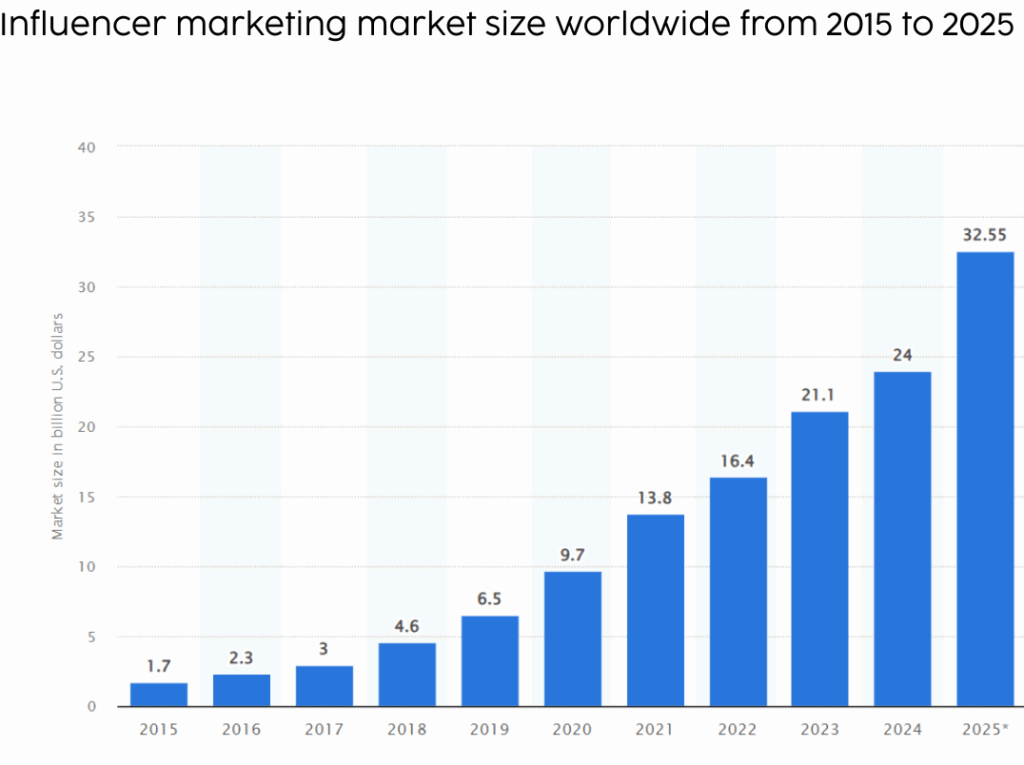
Tech influencer marketing is part of a broader trend that has seen exponential growth over the past decade, with the global market expected to reach $32 billion by the end of 2025 — an $8 billion increase from 2024 and the largest year-over-year jump to date.
As more brands adopt this strategy, estimated to reach nearly 86% in 2025, it’s clear that influencer marketing is becoming a core part of how companies build trust and acquire customers. Consumers increasingly relate to influencers they follow – resulting in a positive impact for brands. 69% of consumers are more likely to trust a recommendation from a credible influencer over a brand.
This trust drives action, as 49% of consumers make purchases based on influencer content at least daily, weekly, or monthly. These trends go beyond increasing numbers, but represent a sustainable digital strategy to scale companies and increase brand awareness. While execution varies by industry, here’s how tech brands are using influencers to grow.
How Backbone Leveraged Tech Creators to Drive Engagement
Backbone, founded in 2018, offers a mobile gaming controller. Instead of traditional ads, they focused on tech influencer marketing. They partnered with gaming and tech creators on YouTube and Twitch. These influencers were known for reviews, product comparisons, and gaming content.
The influencers showcased how Backbone’s device improves the gaming experience. This generated buzz in their communities. For expansion, Backbone localized content and ads in five countries across the US and Europe. The strategy produced over 180 influencer-generated posts and 26 additional out-of-contract posts. It boosted visibility, resulting in 100k impressions and 6k engagements.
How LG Launched Their Product With Influencer Marketing
LG worked with the agency Disrupt to launch the ‘StanbyME Portable & Wireless Screen’ in the UK, Italy, and Germany. Disrupt selected 17 influencers across these markets. They focused on influencers with authentic connections to niche audiences like lifestyle, family, and tech.
Each influencer created content within LG’s guidelines while maintaining their individual style. The campaign achieved over 7.5 million impressions, 26,000 link clicks, 155,000 engagements, and an 80% impressions rate.
Different Influencer Tiers
When planning your campaign, it’s essential to understand influencer tiers and their differences. This is especially important for tech influencer marketing. Influencers are divided into five categories by follower count:
Nano-influencers: 500–10,000 followers
Micro-influencers: 10,000–100,000 followers
Mid-tier influencers: 100,000–500,000 followers
Macro-influencers: 500,000–1 million followers
Mega-influencers: 1 million+ followers
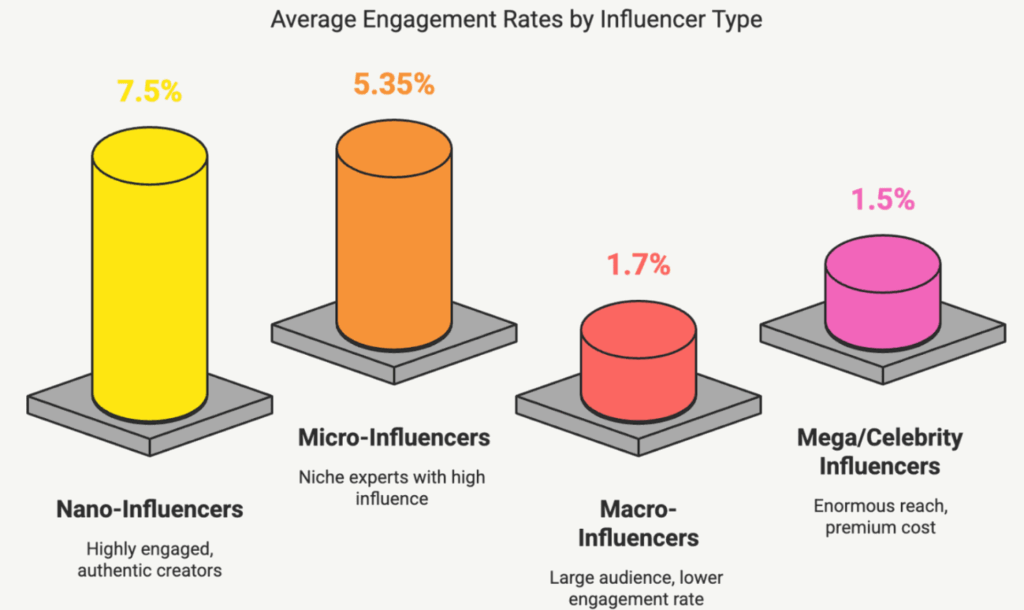
Mega-influencers may seem appealing due to their large following. However, they often have lower engagement, making them less effective for many campaigns. Nano-influencers dominate Instagram, making up 75.9% of all influencers. Micro-influencers follow at 13.6%.
Despite smaller audiences, nano-influencers have highly active and loyal followers. Their engagement rates average 4.39%, with 7–8% specifically on Instagram. This makes them ideal for tech campaigns.
Nano-influencers are also the most cost-effective, followed by micro-influencers. Prices vary across platforms: nano-influencers typically charge $10–$100 per post, while micro-influencers charge $100–$500. Using smaller, focused audiences allows brands to maximize ROI and achieve more cost-efficient campaigns.
Finding Influencers That Align With Your Brand In-House
The first step is discovering influencers relevant to your brand. Social media hashtags can show trending content in your niche. Brand mentions also help identify creators already producing relevant content.
Google Alerts is another effective tool. It notifies you when specific keywords are mentioned online. Blogs, YouTube, and LinkedIn are also useful for discovering influencers.
Ensure your brand is accessible for outreach. Include a link or form on your website or social media where influencers can submit inquiries. This streamlines communication and may foster organic collaborations.
How Using An Agency Can Elevate Your Brand
In-house influencer marketing works in some cases. However, partnering with a tech influencer marketing agency offers broader opportunities that internal teams often cannot match. Agencies have established relationships across platforms and niches, giving your brand access to the right influencers.
With their expertise, agencies can match your brand with influencers who resonate with your target audience. This ensures your message reaches the right people and maximizes campaign ROI. On average, brands earn about $5.78 for every dollar spent on influencer marketing.
Challenges can arise, and without a crisis management plan, your brand may be at risk. Experienced agencies create tailored plans to address potential issues. These plans include clear internal communications, situational strategies for common influencer-related problems, and protocols to measure progress. Having these protocols in place allows your brand to respond quickly, protect its reputation, and maintain audience trust.
Agencies also spot emerging trends early. Leveraging these insights keeps your campaigns ahead of competitors. Their industry knowledge supports platform-specific strategies and ensures messaging stays consistent with your brand voice. Importantly, agencies help you avoid outdated tactics that no longer resonate.
With the right agency, your brand gains trend awareness, strategic execution, platform expertise, and messaging that drives lasting impact.
Drive Results Through Influencer Marketing with LRBrained
At LRBrained, we help tech brands navigate the ever-evolving world of influencer marketing with clarity and confidence. Whether you’re building an in-house strategy or looking to scale with expert support, our team offers the insight, tools, and network needed to create impactful influencer campaigns. LRBrained delivers the strategic guidance to ensure your brand stays relevant, visible, and ahead of the competition.